

VACCINATIONS
What to Expect at Your Appointment
Vaccinations protect your pet from life-threatening diseases, giving you peace of mind that they are safe. To ensure total protection, your pet needs a primary course of injections as a youngster, followed by regular annual boosters throughout their life.
During the appointment, your vet will perform a full physical examination to ensure your pet is perfectly healthy before receiving their injection. The vaccine is given gently under the skin at the back of the neck—most pets barely even notice it!
Side effects are incredibly rare and typically mild (such as a slight temperature or a little lethargy for 24–48 hours). The risks of remaining unvaccinated are far higher than the risk of any minor side effect, but our team is always on hand if you have any concerns.
💡 Real Pets Health Club Members: All routine annual boosters and the associated full clinical health checks are fully included at no extra cost for both dogs and cats on our Core and Freedom health plans!

PUPPY VACCINATIONS
We recommend starting your puppy’s initial vaccinations from 7–8 weeks of age, with their second injection following 2–4 weeks later
They will be fully protected 2-4 weeks after their final injection against Parvovirus, Distemper, Parainfluenza, Hepatitis and Leptospirosis
-
Canine Parvovirus is extremely contagious and is spread through direct or indirect contact with infected faeces. It causes severe gastroenteritis which requires veterinary hospitalisation and can be fatal, particularly in puppies under the age of 6 months.
-
Canine Distemper is a highly contagious virus which affects the gastrointestinal, respiratory, skin, immune and central nervous systems. Your dog can get canine distemper by being around other dogs or wild animals that have the virus and is airborne. Initial symptoms can include fever, nasal discharge, lethargy, coughing, loss of appetite, skin sores and vomiting and diarrhoea. Brian inflammation and neurological symptoms such as seizures and paralysis can also occur, sometimes only becoming evident months after infection.
-
Canine Hepatitis is an acute contagious disease which affects the liver and other major organs. Your dog can get Canine Hepatitis from an infected dog, from going somewhere an infected dog has been or touching something an infected dog has touched. In mild cases symptoms may include lethargy, loss of appetite, coughing, vomiting and diarrhoea while more severe cases can lead to seizures and can be fatal.
-
Leptospirosis is a bacterial disease which causes serious illness by damaging vital organs such as the liver and kidneys and is often fatal. Your dog can catch Leptospirosis from other infected animals including dogs, mice, rats and cows and it can also be caught from drinking infected water.
Kennel Cough: We also highly recommend protecting your dog against Kennel Cough. This is a highly contagious respiratory infection that causes a harsh, hacking cough. While rarely dangerous in healthy adult dogs, it can lead to complications like pneumonia in puppies or senior dogs. Proof of this vaccine is almost always required by boarding kennels and doggy daycares.
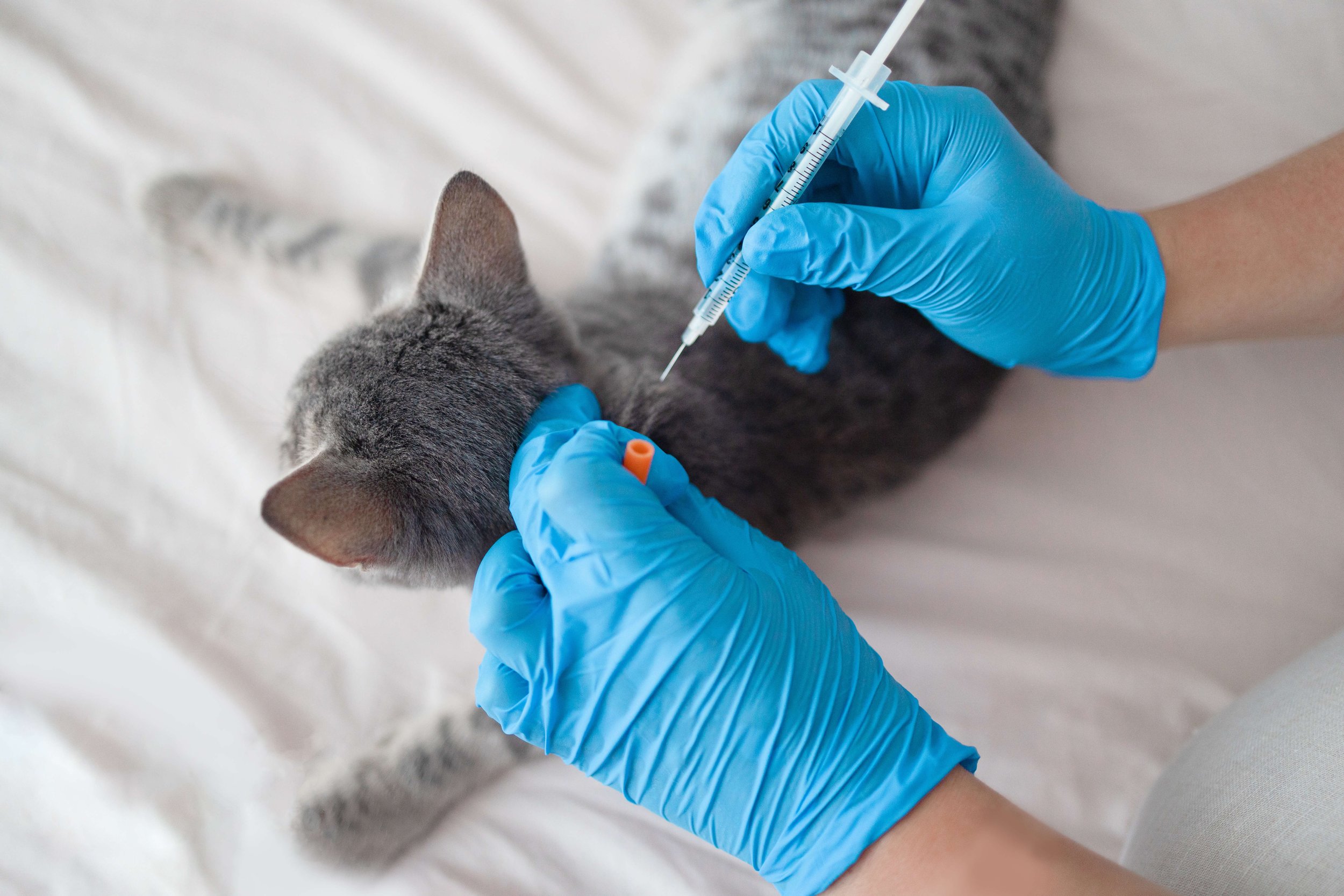
KITTEN VACCINATIONS
We recommend starting your kitten’s initial vaccinations from 9 weeks of age, with their second injection following 3–4 weeks later
They will be fully protected 3-4 weeks after their final injection against Feline Calicivirus and Feline Herpes Virus (Cat Flu), Feline Parvovirus and Feline Leukaemia Virus (if they go outside)
-
Feline Calicivirus and Feline Herpes Virus (Cat Flu) is extremely contagious, like human flu, and causes similar symptoms such as a high temperature, sneezing, weepy eyes etc. Infection is widespread throughout the cat population and is spread through germs on surfaces such as food bowls, and bedding. Cat flu can be extremely serious, especially for kittens as they find it harder to fight infections. Your kitten should be vaccinated as soon as they are old enough and continue to have regular vaccinations throughout their lives – once a cat has caught cat flu they can be a carrier of the disease and suffer symptoms for the rest of their lives. Although vaccination does not always prevent infection with these viruses, it will help greatly in reducing the severity of the disease if a vaccinated cat does become infected.
-
Feline Parvovirus is spread through direct or indirect contact i.e. from cat to cat or through objects an infected cat has touched. It causes severe gastroenteritis and can be fatal, particularly in kittens as their immune system is not fully developed. If a cat contracts Feline Parvovirus whilst pregnant her kittens may be born with brain damage. It is highly contagious and the virus can survive for long periods in the environment – vaccination is the only real way to protect your cat.
-
Feline Leukaemia (FeLV) is a serious disease which attacks the immune system and causes cancers such as lymphoma and leukaemia. Due to the damage caused to the immune system the risk of other infections and diseases is also increased. FeLV is a common disease and is spread through contact with infected bodily fluids i.e. saliva, urine and faeces – sharing bowls, litter trays etc. Kittens can also catch it in the womb and from their mother’s milk. Symptoms may include lethargy, weight loss, diarrhoea and vomiting, growths and lumps – often the first signs of FeLV are missed because they are mild however most cats that contract it become seriously ill and die within a few years. They are also carriers and can spread the disease to other cats.
RABBIT VACCINATIONS
Rabbits can be vaccinated from 7 weeks of age.
Their routine vaccinations provide vital protection against: Myxomatosis, Rabbit Viral Haemorrhagic Disease-1 (RHVD-1) & Rabbit Viral Haemorrhagic Disease-2 (RHVD-2)
-
Myxomatosis is a virus that causes severe disease in rabbits which is nearly always fatal. It is a devastating disease that is spread via wild rabbits, mosquitos and fleas and damages the skin, eyes, lungs, liver and genitals. Symptoms may include weepy eyes, lumps and ulcers, difficulty eating and breathing problems. Vaccination on an annual basis is the best way to protect your rabbit but you should also keep your rabbit’s living space clean to avoid attracting insects and treat regularly for fleas.
-
Rabbit Viral Haemorrhagic Disease attacks the internal organs and causes internal bleeding in rabbits. There are 2 types, both of which are sadly fatal in most cases. RHVD-1 causes very sudden illness and often develops so quickly that infected rabbits die before any symptoms are noticed. RHVD-2 develops more slowly and is often fatal within 1-2 weeks. This means that rabbits with RHVD-2 are more likely to spread the disease through rabbit to rabbit contact because they live longer with symptoms which include blood around the nose, mouth or bottom, lethargy, loss of appetite and a high temperature. It can also be spread through insect bites and in the air. Any new rabbits should be vaccinated and kept separate from your existing rabbits for at least three weeks.

ANNUAL BOOSTER VACCINATIONS
Vaccine protection lasts for exactly one year after a primary course. Because of this, annual boosters are vital to maintain your pet's immunity. If a booster is missed by too long, their immunity drops, and they may need to start the full primary course all over again.
Every booster appointment includes a comprehensive head-to-tail physical health check. It’s the perfect opportunity to chat with your vet, ask questions, and ensure your pet stays in peak condition year after year.
*Remember, if your dog or cat is a member of the Real Pets Health Club, these annual boosters and health checks are already completely covered by your monthly membership!
